AI automation for a Central PA business means using software to handle the repetitive office work that currently eats your team's day: answering the phone after hours, booking jobs, chasing quotes, and moving information between systems. The wins here are operational, not futuristic, and most of them pay back inside a quarter.
We are based in Annville, between Lebanon and Hershey, and we spend most of our week inside businesses across Lebanon, Dauphin, Lancaster and York counties. So this is not a national listicle about AI trends. It is what actually moves the needle for a 12-person HVAC company in Palmyra, a machine shop outside Elizabethtown, or a three-location dental practice in the Harrisburg suburbs.
The pattern is consistent and slightly boring: the businesses getting real value from AI here are not doing anything clever. They picked one leaky process, fixed it properly, measured it, and then did the next one.
Why Central PA Is a Different Automation Problem
Central PA businesses tend to be established, owner-operated, and staffed by people who have been there a long time. That combination changes what automation should do. The goal is not to replace a team that already works. It is to stop losing revenue in the hours and gaps that team cannot physically cover.
Three local realities shape every project we run here.
The labor market is tight, and loyal
Hiring a competent front desk person in Lebanon County is genuinely hard, and when you find one, you keep them for a decade. Owners here are rarely trying to cut headcount. They are trying to stop asking three people to do five jobs. That reframes automation from a cost-cutting story into a capacity story, and it is why the projects that stick are the ones that take work off a specific person's plate by name.
The service radius is wide
A contractor covering Lebanon, Dauphin and northern Lancaster counties is driving 40 minutes between jobs. Nobody is answering the phone from the truck. Nobody is following up on a quote at 4pm on a Friday in July. The revenue does not leak because the business is bad, it leaks because the people are in a van.
The competition just got faster, quietly
Speed to lead is now the whole game in local service work. Industry data puts missed call rates for HVAC contractors somewhere between 27% and 74%, and roughly 78% of callers who hit voicemail simply dial the next company on Google rather than leaving a message. You are not losing to a better company. You are losing to whoever picked up first.
The Five Automations That Actually Work Here
These are ranked by how often they pay for themselves fastest in the businesses we work with locally. Start at the top. Resist the urge to do all five at once, because the second one is much easier to build correctly once the first one is feeding it clean data.
1. Answer every call, including the ones you currently miss
This is almost always the highest-return automation for a local service business, and it is the one owners underestimate most. An AI receptionist answers on the first ring at 9pm on a Saturday, handles unlimited simultaneous calls during a heat wave, asks your qualifying questions, and books straight into your calendar.
Run your own math before you believe anyone's marketing. Take your missed calls per month from your phone records, multiply by your average job value, then multiply by your normal close rate. For most contractors we work with in the Harrisburg and Lebanon area, that number lands somewhere between $3,000 and $10,000 a month, against a system cost in the low hundreds. We go deeper on the staffing side of this in our piece on chronic front desk turnover, and the service itself is AI front desk operations.
2. Respond to web leads in under five minutes, automatically
A form fill that sits in an inbox until Monday morning is not a lead, it is a record of one. The fix is unglamorous: the moment a form is submitted, the prospect gets a real text message, the job is created in your CRM, and the right person gets a notification with the details already attached.
The part that matters is that the text has to be answerable. A no-reply autoresponder teaches people you are not really there. A message that says "Got your request for a Hershey furnace quote, is tomorrow morning or Thursday afternoon better?" starts a conversation while they still have your website open.
3. Chase your own quotes without chasing them
Almost every local business we audit has a folder of quotes nobody followed up on. Not because the team is lazy, but because follow-up is the first thing that falls off when the day gets busy, and it never causes an emergency when it is skipped.
A quote follow-up sequence is three or four touches over two weeks, stopping instantly if the customer replies or books. It is one of the cheapest automations to build and one of the most reliable, because it works on demand you have already paid to generate.
4. Stop paying people to retype information
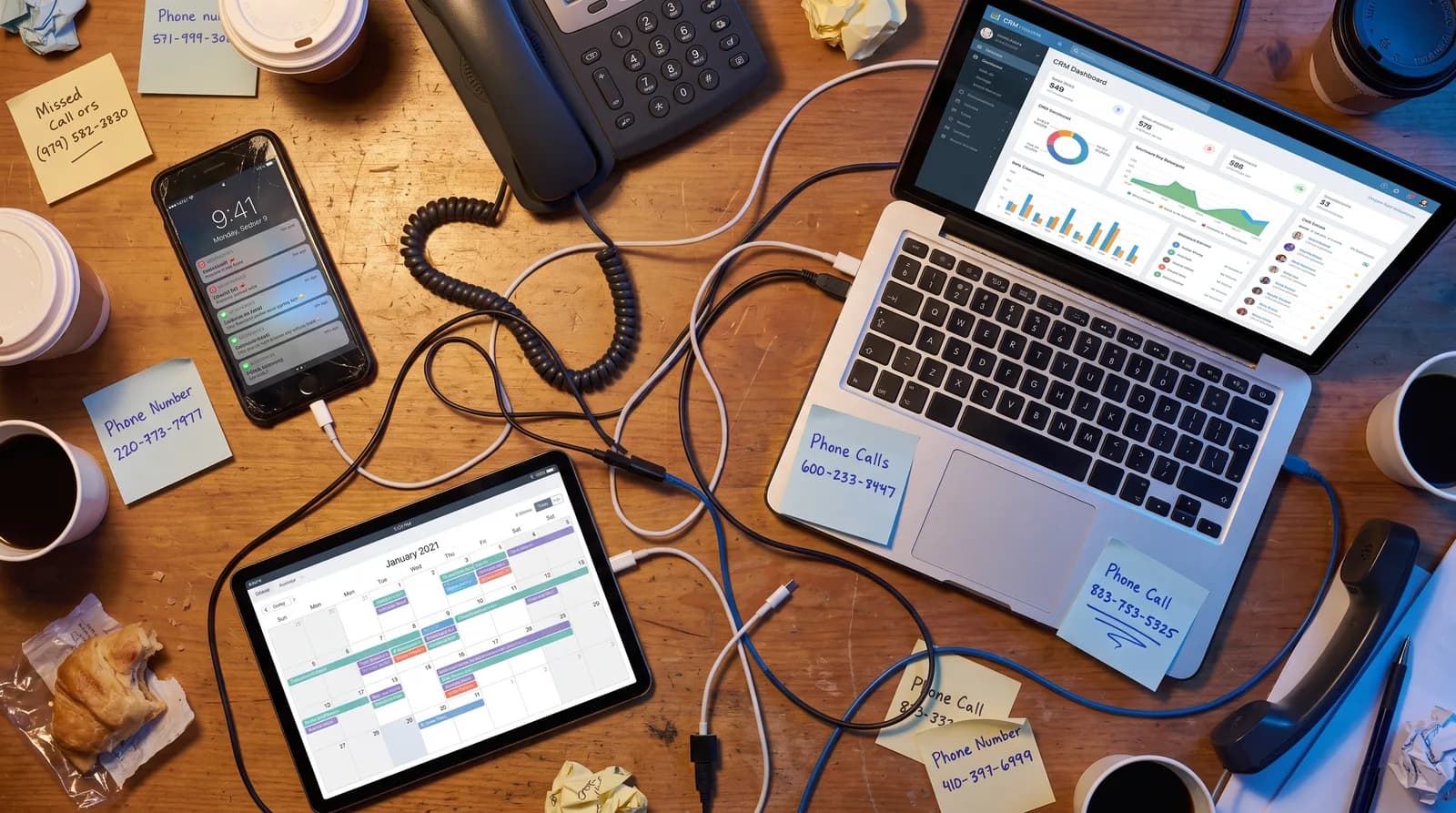
The scheduling tool, the CRM, the accounting system and the review platform typically do not talk to each other, so somebody becomes the integration layer. If two staff members each spend 45 minutes a day moving data between systems, that is roughly 30 hours a month of skilled payroll spent on copy and paste.
This one rarely feels urgent, which is exactly why it persists for years. We wrote about the full cost of a disconnected stack in 7 AI tools, zero integration. The fix is workflow automation with proper error handling, not a weekend of Zapier experiments that silently break in November.
5. Ask for the review at the right moment
Reviews are not a vanity metric in local search. In the 2026 Whitespark local ranking factors survey, review signals account for roughly 20% of local pack weight, up from 16% in 2023, and review velocity ranks among the most influential individual factors. A business with 200 reviews at 4.7 stars will usually outrank one with 30 reviews at 5.0.
The automation is trivial: when a job is marked complete and paid, the customer gets a request within the hour, while the technician is still fresh in their memory. The discipline is in the trigger. Sending review requests from a list once a month is why most businesses get a 4% response rate instead of 30%.
What Does Not Work, Based on Cleaning It Up
A fair amount of our local work is fixing AI that someone already bought. The failures are predictable enough to list, and every one of them is avoidable in the first week of a project rather than the sixth month.
- Buying a tool before defining the process. If the workflow is unclear when a human does it, automating it just produces a faster mess.
- An AI that answers from nothing. A chatbot or voice agent with no grounding in your actual pricing, service area and policies will confidently invent all three. That is worse than no chatbot.
- No owner and no monitoring. Automations break when a vendor changes an API. If nobody is alerted, you discover it through missing leads weeks later.
- Automating the exception first. Teams love to start with the weird 5% case. Automate the boring 80% path, keep the exceptions human.
- No before number. If you did not record missed calls, response time and hours spent before you started, you will never prove it worked, and it will be cut in the first slow quarter.
A Realistic First 90 Days
A single automation, done properly and measured, beats a platform rollout that stalls in month two. Here is the sequence that works for a 10 to 50 person Central PA business, assuming nobody has a spare day a week to run a project.
Weeks 1 to 2, count things. Pull missed calls from your phone system, average response time on web leads, quotes sent versus quotes followed up, and an honest estimate of hours spent moving data between systems. This is the baseline everything else is judged against.
Weeks 3 to 6, fix the phone. Deploy call answering, grounded in your real services, pricing bands, service area and hours. Listen to the transcripts every day for the first two weeks and correct what it gets wrong. This is the step people skip, and it is the step that determines whether customers trust it.
Weeks 7 to 10, connect the path. Make sure a booked call becomes a CRM record, a calendar entry and a job without anyone typing. Add the instant text response for web leads at the same time, since it uses the same plumbing.
Weeks 11 to 13, prove it. Rerun the week 1 numbers. Missed calls, response time, quotes followed up, hours saved. If the numbers moved, you have both a result and the internal permission to do the next thing. If they did not, you learn that for a few hundred dollars rather than a few thousand.
If you would rather not run that baseline yourself, our growth audit produces the same numbers in a couple of days, and our Central PA page covers how we work with businesses in Lebanon, Dauphin and Lancaster counties.
Who This Is Actually For
Not every business needs this yet. The honest threshold is roughly this: you have more inbound demand than your office can process, you know you are missing calls or follow-ups, and you have at least one system holding customer records. Below that, you have a marketing problem, not an automation problem, and automation will just make the quiet louder.
The businesses that get the fastest results locally tend to be home services, medical and dental practices, professional services firms, and small manufacturers with a quoting process. What they share is not an industry. It is a high value per lead and a phone that rings when nobody is free to answer it.
If you are still working out where to begin, start with where to start with AI automation, which walks through the same decision without the local framing.
Frequently Asked Questions
What does AI automation cost for a small Central PA business?
Call answering and lead response systems typically run in the low hundreds per month in software, with a one-time build to connect them to your existing tools. Larger workflow projects scale with the number of systems involved. The useful comparison is not against zero, it is against the revenue currently leaking through missed calls and unfollowed quotes, which is usually the larger number.
Will customers know they are talking to an AI?
Often yes, and that is fine when it is handled honestly. Callers care far more about being answered immediately and getting a real appointment than about who took the details. What breaks trust is an AI that pretends to be a person and then cannot answer a basic question about your service area or pricing.
Do I need to replace my current software?
Usually not. Most Central PA businesses we work with keep their existing scheduling, CRM and accounting tools and add a connection layer between them. Replacement makes sense only when a specific system genuinely blocks the work, because migration costs real money and retraining a long-tenured team costs more than the license.
How long before we see a result?
Call answering shows up in the numbers within the first month, because missed calls become booked jobs immediately. Integration and follow-up work usually show measurable results by week eight to twelve. Anything promising transformation in a week is describing a demo, not an implementation.
What if our data is a mess?
That is normal and it is not a blocker for phone and lead response work, which creates clean records going forward. It does matter for reporting and anything that reads your history. The practical approach is to automate the front of the funnel first while cleaning data in parallel, rather than delaying everything behind a cleanup project.
Can we build this ourselves?
The first workflow, often yes. The difficulty is never the happy path. It is duplicate prevention, error handling, what happens when a vendor changes an API, and knowing when something has silently stopped working. Those decide whether the automation is an asset or a quiet liability six months later.
Do you only work with businesses in Central PA?
No, we work with clients nationally, particularly on ecommerce and Shopify Plus. We are based in Lancaster and a meaningful share of our automation work is local, which means we can sit in your office for the discovery session rather than doing everything over video.
Want results like these for your brand?
Book a free 30-minute revenue audit with PA Digital Growthand we'll map your fastest path to growth.
Book a free audit