An AI dental receptionist costs roughly $150 to $1,200 a month depending on the vendor and call volume, against $35,000 to $45,000 a year fully loaded for a front desk hire and $235 or more a month for a traditional answering service. The savings are real, but the number that matters is the revenue currently walking out through unanswered calls.
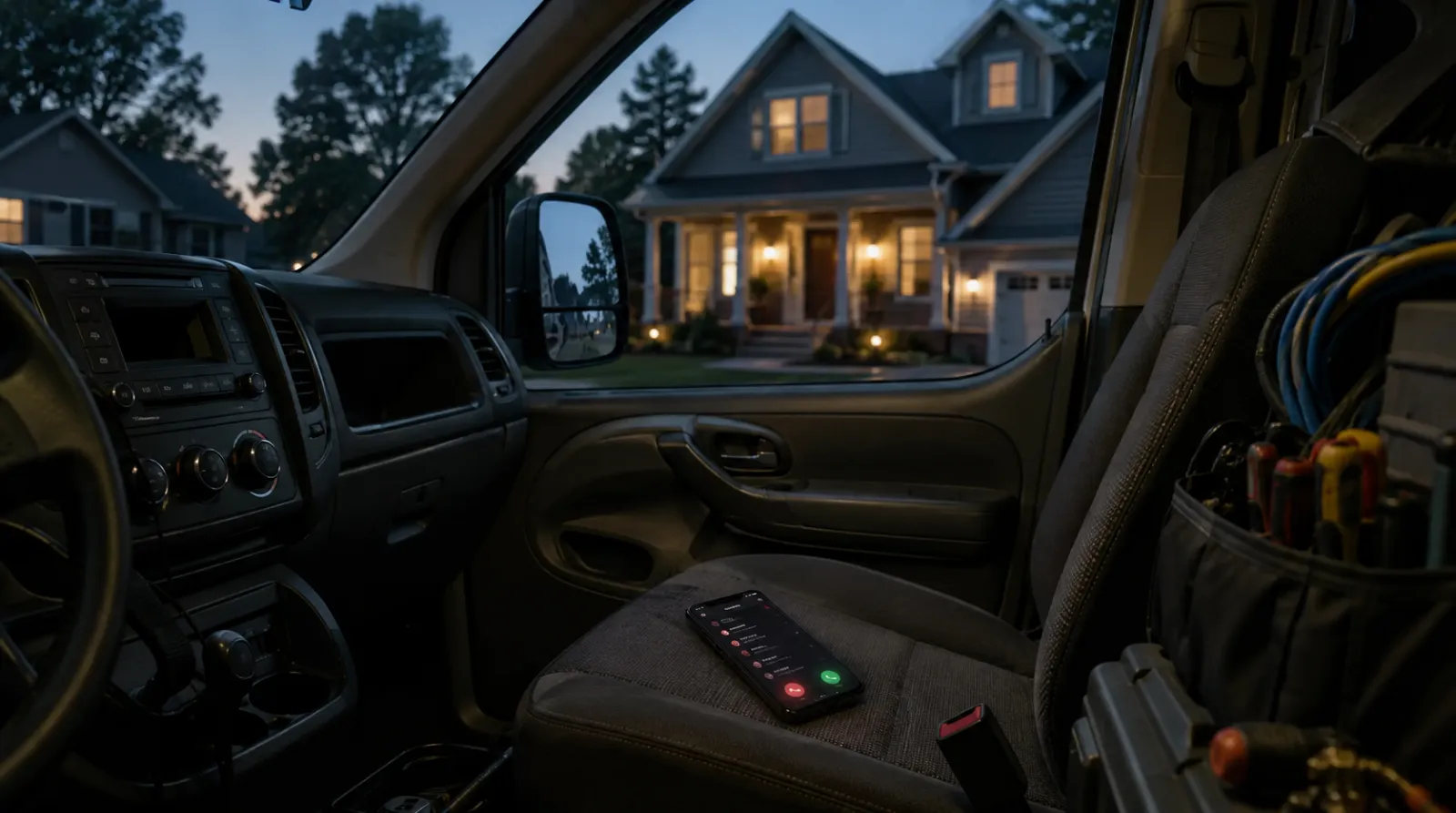
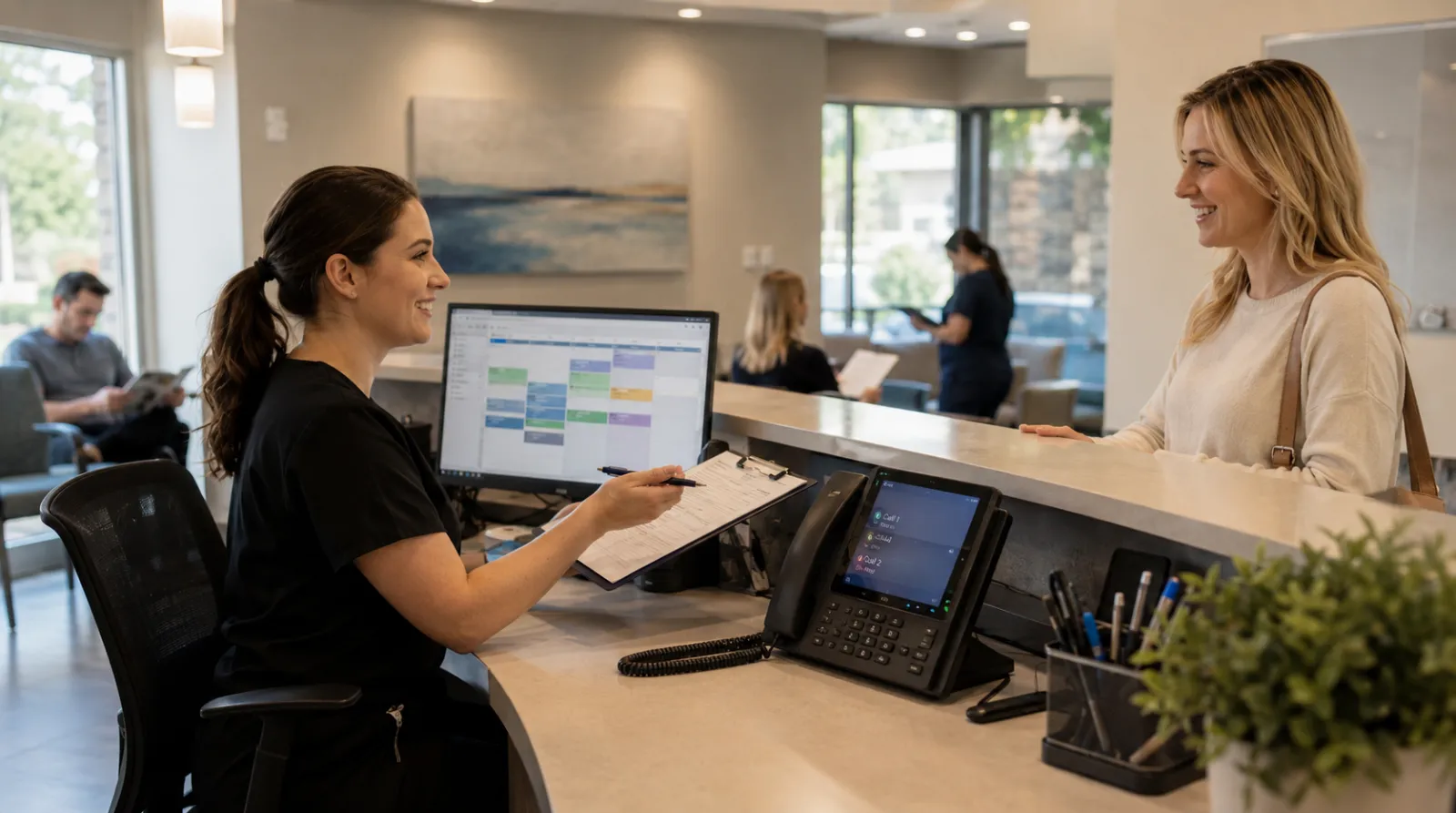
Every practice we talk to in the Harrisburg and Lancaster area has the same shape of problem. The front desk is competent and busy. Patients are standing at the counter. The phone rings during checkout, during insurance verification, and constantly between 11:30 and 1:30 when the desk is short-staffed for lunch.
Nobody is doing anything wrong. The math just does not work: one person cannot check out a patient and answer three calls at once.
What a Missed Call Costs a Dental Practice
Dentistry has an unusually high value per new patient, which makes every unanswered call expensive. Work out your own figure with two numbers you already have: your average first-year value of a new patient, and your conversion rate from new patient call to booked appointment.
If a new patient is worth $800 in year one and you convert 50% of the new patient calls you actually answer, then every ten missed new patient calls is $4,000 of production that went to the practice down the road. Most practices miss far more than ten a month once you count lunch hours, evenings and weekends.
Then add the quieter loss. Cancellations that never get filled because nobody called the waitlist. Recall patients who meant to book and did not. Hygiene slots empty on a Tuesday because the follow-up sat in a pile.
What the Options Actually Cost
Published pricing varies widely because vendors bundle different things. Broadly, in 2026:
- AI receptionist platforms: around $150 to $300 a month for a small practice on a general platform, and $250 to $1,200 a month for dental-specific products with practice management integration.
- Traditional answering services: $235 to $700 a month, usually with per-minute charges on top, and they take messages rather than book appointments.
- Additional front desk staff: $35,000 to $45,000 a year fully loaded, and still no coverage evenings or weekends.
The honest framing is not AI versus a person. It is AI versus the calls nobody is answering right now, because that is the actual comparison in most practices. Your front desk is not being replaced, they are being uninterrupted.
What actually drives the price
Three things: call volume, whether it writes into your practice management system, and whether it handles insurance questions. Volume-based pricing looks cheap in a quiet month and stings in a busy one, so check the overage rate before you sign. Integration is where the value is and where the cost sits.
What It Should Handle, and What It Should Not
Scope discipline is what separates practices that get value from practices that quietly turn the thing off after two months.
Let it handle: new patient intake and booking, appointment confirmations and reschedules, hours, location and parking, accepted insurance list, general pre-appointment instructions, filling cancellations from a waitlist, and after-hours triage that books the morning.
Do not let it handle: clinical advice of any kind, specific coverage or out-of-pocket estimates for an individual plan, anything involving a patient's clinical history, or genuine emergencies. Those escalate to a person, and the escalation rules should be written down before launch.
The insurance line is the one practices get wrong. "We accept Delta Dental" is a safe factual answer. "Your cleaning will be covered at 100%" is a promise the practice then has to honour or explain away at the desk. Keep the assistant on the first side of that line.
The Compliance Question
Any system that takes patient names, phone numbers and appointment reasons is handling protected health information. That means the vendor must sign a business associate agreement, and you should read what they do with call recordings and transcripts, how long they retain them, and whether that data is used to train models.
If a vendor cannot produce a BAA, the conversation is over regardless of how good the demo is. This is not a formality, it is the difference between a tool and a liability. We deal with this class of question routinely on our compliance side.
A Rollout That Does Not Upset the Front Desk
Start with overflow only. The assistant picks up when the desk does not, which means nothing changes for staff except that the phone stops ringing during checkout. Nobody is displaced, and the team gets to judge it on transcripts rather than on rumour.
Then run it after hours and at lunch. Review every transcript for two weeks and correct what it gets wrong, because it will get something specific to your practice wrong in week one. Once the team trusts it, extend to confirmations and waitlist fills, which is where the schedule density improves.
Measure three things against your baseline: calls answered, new patient appointments booked, and unfilled slots. If new patient bookings rise and the desk reports fewer interrupted checkouts, it is working. The related staffing argument is in the AI fix for chronic front desk turnover, and the service is AI front desk operations.
Frequently Asked Questions
Will patients be annoyed by an AI answering?
The comparison patients actually make is against ringing out or a hold queue, not against your best receptionist on a quiet morning. Someone calling at 7pm about a broken crown wants an appointment. Annoyance comes from an assistant that cannot answer whether you take their insurance, which is a configuration issue you fix in week one.
Does it integrate with Dentrix, Eaglesoft or Open Dental?
Dental-specific vendors generally support the major practice management systems, though depth varies. Ask specifically whether it can read live availability and write an appointment, or only create a task for someone to book later. The second kind is a message service with better marketing.
Is this HIPAA compliant?
It can be, and it is entirely down to the vendor and configuration. Require a signed business associate agreement, confirm how recordings and transcripts are stored and for how long, and confirm in writing that your data is not used for model training. No BAA means no deal.
Will we have to let a front desk person go?
Almost never, and practices that frame it that way get poor adoption. In most cases the desk stays the same size and stops being interrupted, which improves the in-person patient experience. The realistic staffing effect is not needing to hire the additional person you have been trying to recruit.
What about specialty practices?
Orthodontics, oral surgery and pediatric practices work the same way, with a narrower scope. Referral-heavy specialties should have the assistant capture the referring office and reason clearly and escalate more readily, since the value of a single referral relationship is high.
How quickly does it pay for itself?
For most practices, one additional new patient a month covers a mid-tier system. That is a low bar when you are currently missing calls at lunch and after hours. Track new patient bookings specifically rather than total calls answered, because that is the number that funds it.
Want results like these for your brand?
Book a free 30-minute revenue audit with PA Digital Growthand we'll map your fastest path to growth.
Book a free audit