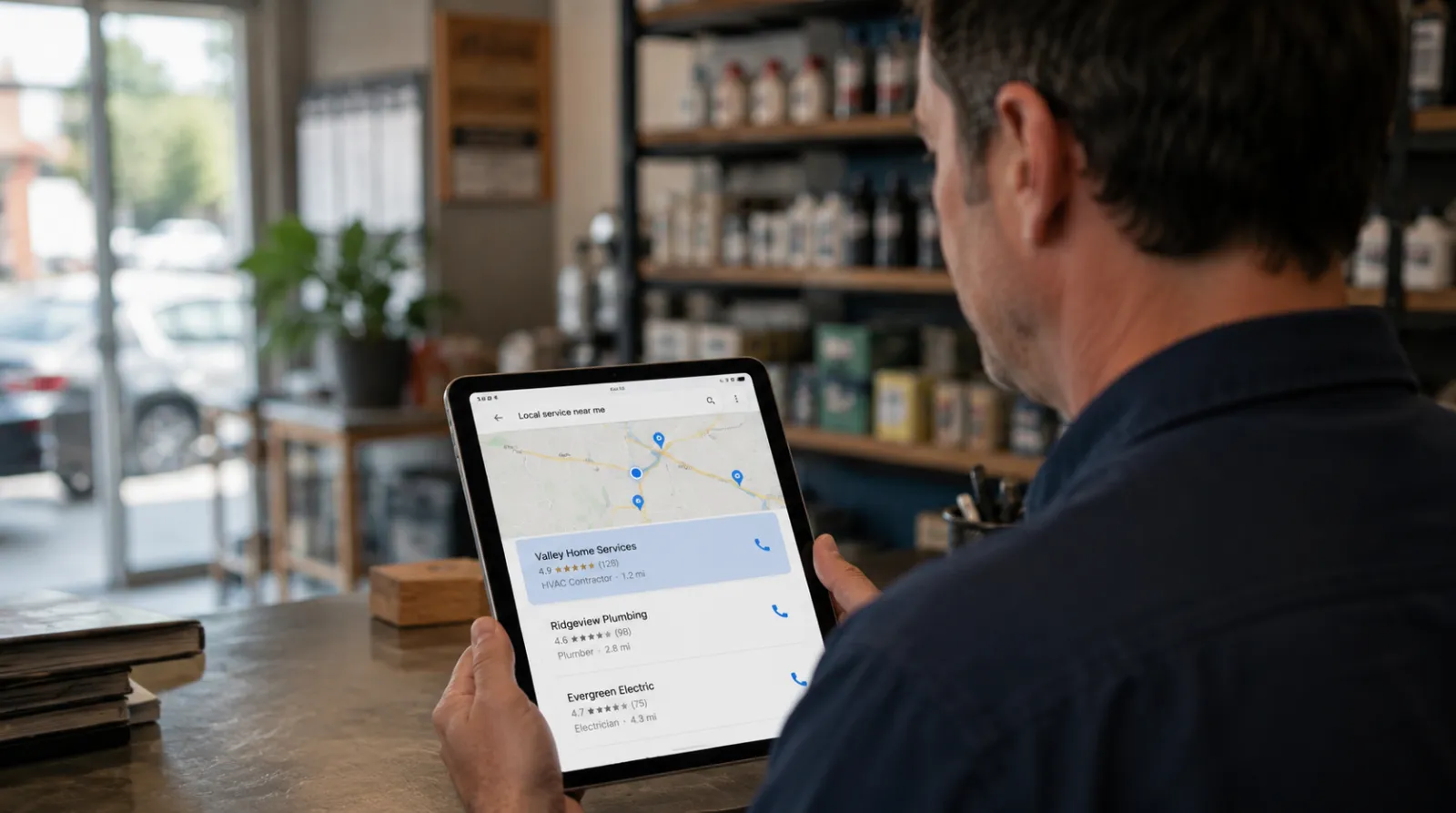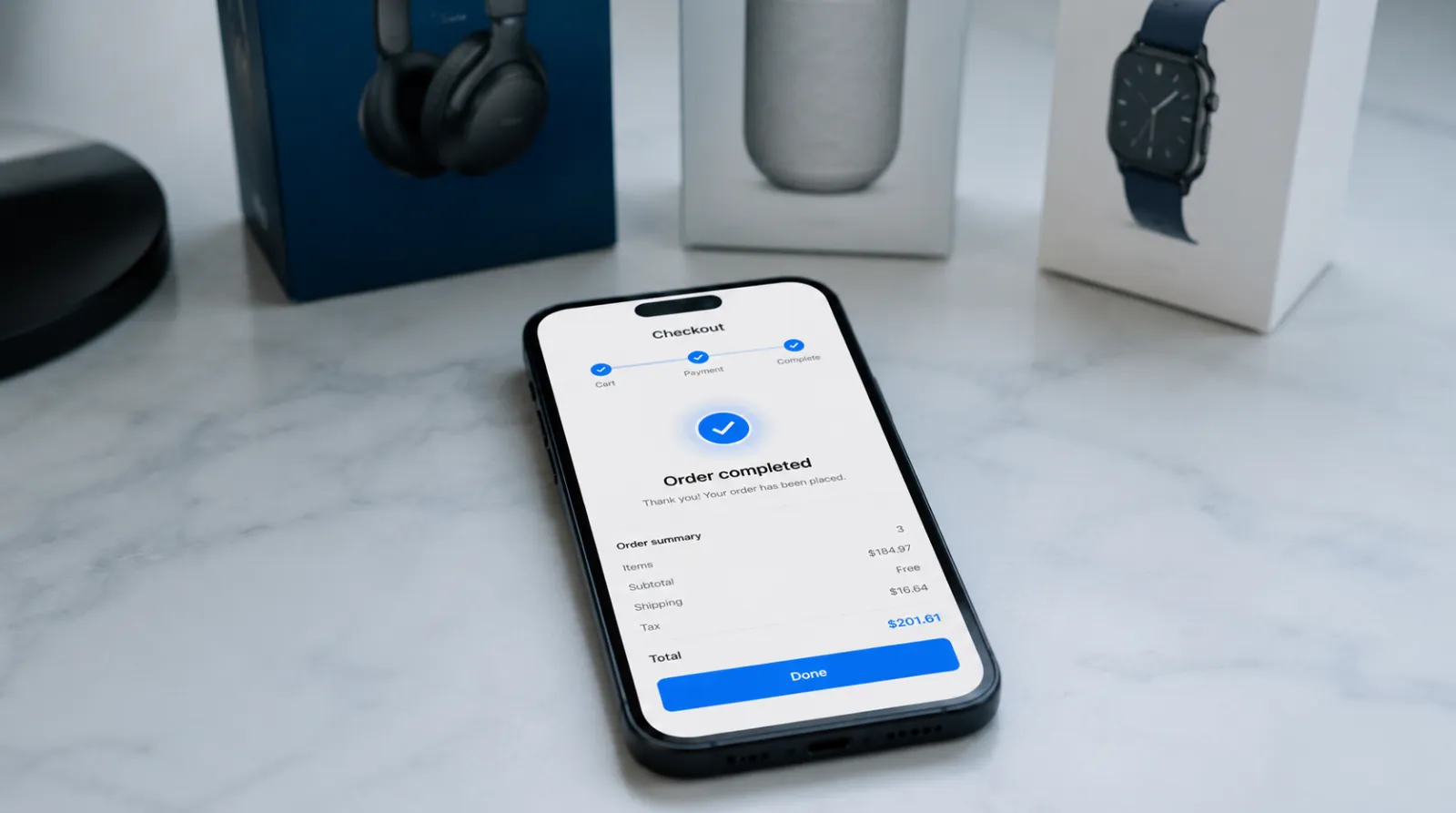
Agentic commerce means an AI agent handles discovery, comparison and purchase on a shopper's behalf, within limits they set. It stopped being theoretical in the last year: Google runs agentic checkout in AI Mode and Gemini, ChatGPT Shopping is live across the US with Etsy and over a million Shopify merchants connected, and payment protocols to support it landed between September 2025 and January 2026.
The forecasts are large and, as forecasts, worth treating carefully. McKinsey estimates agentic AI will influence $3 to $5 trillion of global retail by 2030. Morgan Stanley expects nearly half of online shoppers to use AI shopping agents by then, at roughly a quarter of their spending.
What follows is what is actually shipped today, what changes for a store, and the work that pays off regardless of whose forecast turns out right.
What Is Actually Live Right Now
Google's agentic checkout appears inside AI Mode and Gemini, with a buy-for-me flow live at selected US retailers. ChatGPT Shopping is available to all US users. The connective tissue arrived as protocols: the Agentic Commerce Protocol in September 2025, MCP adoption through the same period, and UCP debuting at NRF in January 2026.
For Shopify merchants specifically, the important detail is that connection is largely platform-level. Over a million Shopify stores are already reachable this way, which means your products may be discoverable by agents whether or not you have thought about it.
What Changes When the Buyer Is Not Human
Three things break in ways that matter, and none of them are fixed by better photography.
Brand preference weakens at the margin
An agent comparing options against a shopper's stated constraints weighs materials, dimensions, durability and returns policy. It does not have a favourite brand. For challenger brands this is an opportunity. For brands that have been coasting on recognition, it is a threat, and it arrives quietly as a slow decline in consideration.
Your product data becomes your storefront
An agent does not see your hero image, your carousel or your carefully written brand story. It reads structured attributes. A product missing dimensions, material composition or a clear returns window may simply be excluded from the comparison, not because it lost but because it could not be evaluated.
Ambiguity stops converting
Humans tolerate vagueness and infer meaning. Agents do not. "Ships fast" is unusable. "Ships within 2 business days" is a fact an agent can weigh against a constraint. Every soft marketing phrase on your product page is invisible to this buyer.
What to Do Now, in Order
The genuinely useful thing about this trend is that preparing for it is the same work as being good at conventional ecommerce SEO. Nothing here is a bet.
- Complete your product data. Dimensions, weight, materials, compatibility, care instructions, warranty. Every missing attribute is a comparison you cannot enter.
- Make policies explicit and machine-readable. Return windows in days, shipping times in days, restocking fees as numbers. Structured data rather than a PDF.
- Fix your variant structure. Sizes, colours and configurations modelled properly rather than as separate products with the name in the title.
- Keep inventory accurate. An agent that buys an out-of-stock item creates a refund and a bad signal. Accuracy has always mattered and now it is exposed.
- Watch the channel. Track referral traffic from AI sources in analytics so you can see this arriving rather than infer it.
Notice that all five improve conversion for human shoppers too. That is the argument for doing this now rather than waiting for the trend to prove itself.
What Not to Do
Do not rebuild your store for agents. Human shoppers remain the overwhelming majority of your revenue and will for years, and a storefront optimised for machines at the expense of people is a bad trade against a forecast.
Do not buy an agentic commerce platform yet, either. The protocols are new and the standards are still moving. Platform-level support through Shopify covers most of what a mid-sized merchant needs today, and committing to a vendor-specific layer this early risks a rebuild.
And do not panic about disintermediation. Being one of several options an agent presents is not obviously worse than being one of ten organic results, provided your data lets you compete on the attributes that matter.
The Honest Position
This is real and early. The infrastructure shipped, the volume has not arrived at scale yet, and the forecasts are forecasts. The correct response is not a strategy pivot, it is finishing your product data, which most stores have needed to do for years.
The tactical version is in product pages for AI shopping agents, the store-side agent question is in AI agents for Shopify stores, and our platform work is at Shopify Plus.
Frequently Asked Questions
Do I need to opt in for agents to find my products?
Often not, since much of the connection happens at platform level and over a million Shopify merchants are already reachable. Check your own settings rather than assuming either way, and confirm what is exposed. Being discoverable with incomplete product data is worse than being discoverable with complete data.
Will this kill our conversion rate optimisation work?
No. Human shoppers still dominate revenue and respond to design, photography and copy exactly as before. Agentic traffic is an additional channel with different requirements, not a replacement for the one you have. Keep optimising for people and complete your data for machines.
How do we measure agentic traffic?
Referral sources from AI domains in your analytics, plus any channel reporting your platform exposes. Attribution is immature and will improve. For now, watch the trend line rather than expecting precision, and note that a purchase completed by an agent may not look like a normal session at all.
Does this affect B2B commerce?
Eventually and arguably more, because B2B purchasing is already specification-driven and repetitive, which is exactly what agents handle well. Reordering and RFQ processes are natural fits. It is moving more slowly than consumer retail, largely because contract terms and approvals are harder to delegate.
Should we worry about price comparison becoming automatic?
Price comparison has been effectively automatic since comparison sites existed. What changes is that other attributes become equally comparable, which helps if you are genuinely better on materials, warranty or returns and hurts if price was the only thing you were winning on.
Want results like these for your brand?
Book a free 30-minute revenue audit with PA Digital Growthand we'll map your fastest path to growth.
Book a free audit