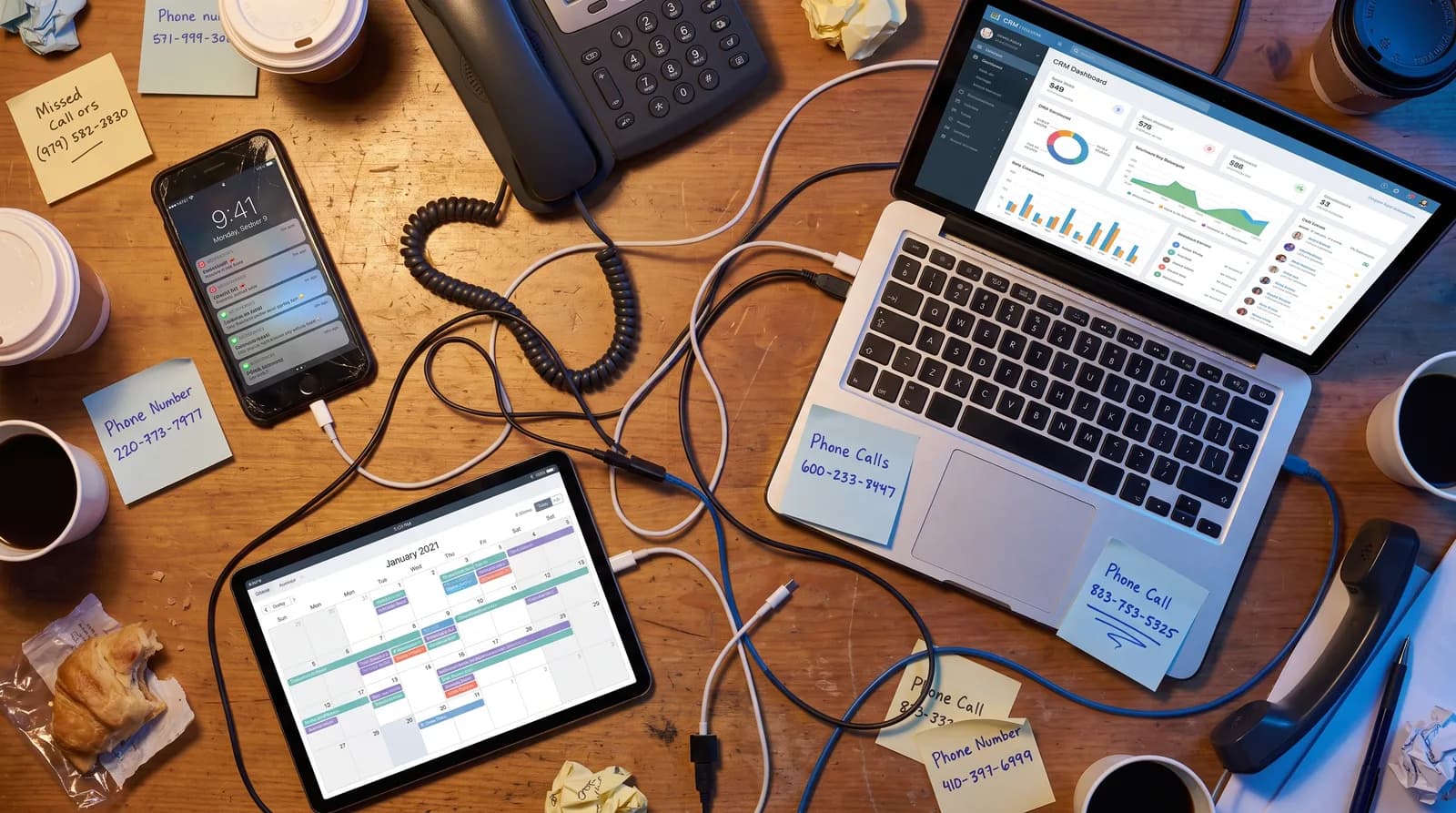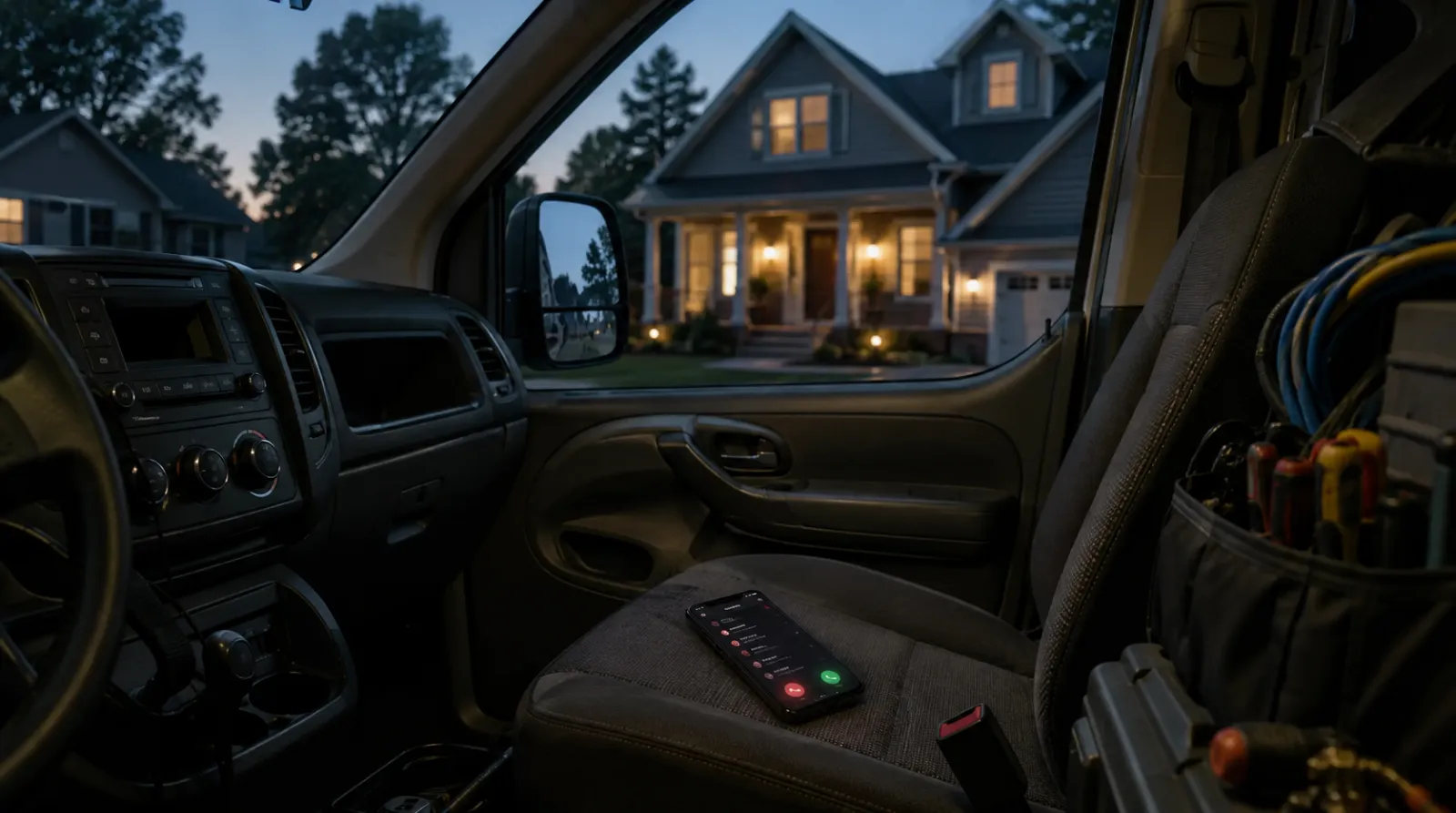
Most HVAC contractors miss between 27% and 74% of incoming calls, and about 78% of callers who reach voicemail hang up and dial the next company on Google. At a typical Central PA job value, that pattern quietly costs a mid-sized contractor somewhere between $45,000 and $120,000 a year in work that never gets quoted.
Nobody plans to miss calls. It happens because the phone rings hardest exactly when nobody can pick it up: the first 90-degree week of July, the first hard freeze in November, 7pm on a Sunday when a furnace quits in Palmyra.
This post is the arithmetic. What the missed calls are actually worth in Lebanon, Dauphin and Lancaster counties, why the usual fixes do not hold, and what to do about it without hiring somebody you cannot find anyway.
Work Out Your Own Number First
Do not take an industry average as your number. Your phone system already has the answer, and the exercise takes 20 minutes. Pull the last 90 days of call logs, count inbound calls that went unanswered or to voicemail, and separate them from your own outbound dialing.
Then apply three numbers you already know:
- Missed calls per month. Straight from the call log. Count after-hours separately, because that bucket is usually the biggest and the easiest to fix.
- Your average job value. Use a blended figure across service calls, repairs and replacements, not your best install.
- Your close rate on calls you do answer. Most contractors are somewhere between 30% and 60% on inbound service calls.
Multiply the three. A contractor missing 60 calls a month at a $450 blended job value and a 40% close rate is leaving roughly $10,800 a month on the table. Even if you assume half those callers would have called back, it is $5,400. That is the honest range, and it is why this is the first thing we fix for local service businesses.
The emergency call is worth more than average
The calls you miss are not a random sample of the calls you get. They skew toward evenings, weekends and peak load, which is exactly when the emergency work happens. Industry figures put an emergency HVAC call at $500 to $900 in revenue. So the calls falling through are, on average, worth more than the ones you answer during business hours.
Why the Usual Fixes Do Not Hold
Every contractor has tried to solve this, usually two or three times. The fixes fail for structural reasons, not because anyone did them badly.
Voicemail
A homeowner with no heat and a two-year-old in the house is not leaving a message and waiting. They are calling the next three results. Voicemail does not capture demand, it documents the moment you lost it.
Forwarding to somebody's cell
This works until the person is on a ladder, driving, at their kid's game, or asleep. It also concentrates the entire company's after-hours revenue on one person's willingness to keep answering, which is a resignation waiting to happen.
Traditional answering services
These genuinely help, and they cost $235 to $700 a month with per-minute charges that spike precisely during your busy season. The bigger issue is quality: the operator does not know your service area, your pricing bands, or whether you handle oil. So you get a message with a name and number, which is better than voicemail and well short of a booked job.
Hiring another office person
The right answer when volume genuinely justifies it. In Lebanon County the practical problems are that the role is hard to fill, costs $35,000 to $45,000 fully loaded, and still does not cover 7pm on a Sunday. Also, one person cannot take four simultaneous calls during a heat wave, and that is precisely when four calls arrive at once.
What Works: Answer Everything, Qualify, Book
An AI receptionist answers on the first ring at any hour, handles unlimited simultaneous calls with no hold music, asks your qualifying questions, and books directly into your dispatch calendar. Pricing generally runs $49 to $199 a month flat, against $235 to $700 for human answering services that also bill by the minute.
The economics are not the interesting part. What determines whether this works is setup quality, and there are four things that decide it.
1. Ground it in your actual business
It needs your real service area by township, your diagnostic fee, your brands, whether you service oil and propane, your emergency policy, and what you do not do. An assistant that invents a $99 diagnostic when yours is $149 creates a customer conflict on day one. This is the same failure mode we covered in AI giving customers wrong answers.
2. Qualify inside the call
Residential or commercial. System type and rough age. Heat, cooling or no power at all. Address and whether it is inside your radius. Homeowner or renter. Those five answers turn a message into a dispatchable job and let you triage an emergency ahead of a maintenance request.
3. Book into the real calendar
If the assistant cannot see technician availability, it can only promise a callback, and you are back to a message. Connecting it to your field service software is the step that converts this from a nicer voicemail into booked revenue.
4. Escalate on purpose
Define what forces a human: no heat below freezing, gas smell, commercial account, existing customer with an open complaint. Everything else can wait for morning. Written down, this is a 15-minute conversation. Left undefined, it is the thing that makes people distrust the system.
Add Missed Call Text-Back as a Safety Net
Whatever answers your phone, any call that still ends without a booking should trigger a text within seconds: a short, human message that invites a reply. Plenty of homeowners who will not leave a voicemail will happily text back a photo of the unit and its model number.
Two rules. Send from a number that can receive replies, and route those replies where somebody will see them. A no-reply text is a worse experience than silence.
What to Expect in the First 60 Days
Weeks 1 and 2 are setup and correction. Read every transcript daily and fix what the assistant gets wrong. It will mishandle something specific to your business in the first week, and catching it then is the difference between a system your team trusts and one they route around.
By week 4 you should see after-hours bookings appear on the calendar with nobody's evening spent on them. By week 8 compare against your baseline: calls answered, calls booked, and revenue from jobs that originated outside business hours. That last number is the one that settles the argument.
If you would rather have the baseline done for you, our growth audit pulls these numbers from your own systems, and AI front desk operations covers the build. For the wider picture, see AI automation for Central PA businesses.
Frequently Asked Questions
Will homeowners hang up on an AI?
Far fewer than hang up on voicemail, which is the actual comparison. Someone with no heat wants an appointment, and they will take one from whatever answers. The hang-ups happen when the system stalls on a simple question about pricing or service area, which is a setup problem rather than a technology problem.
What happens during a real emergency at 2am?
You define the escalation rules, and the assistant follows them exactly. A no-heat call below freezing or a reported gas smell can ring your on-call technician immediately while everything else books for morning. The advantage over a cell forward is that the emergency gets through and the routine call stops waking you.
Does it work with ServiceTitan, Housecall Pro or Jobber?
Yes, the major field service platforms all support this either natively or through an integration layer. The detail worth checking before you buy is whether it can read live technician availability, not just create a job record. Booking against real availability is what removes the callback step.
Do we still need our answering service?
Most contractors run both for the first month, then drop the service once the transcripts show the assistant handling calls correctly. Some keep a human service for commercial accounts only. Keeping both permanently is usually paying twice for the same coverage.
How long does setup take?
A working system takes a few days. Getting it genuinely good takes two to three weeks of reviewing transcripts and tightening answers. Anyone quoting a same-day launch is describing a demo that has never met your customers.
Is this worth it for a two-truck shop?
Often yes, because small shops miss proportionally more calls. Run the math: if you miss 20 calls a month at a $450 blended job value and close 40%, that is $3,600 in exposure against a system in the low hundreds. If you are missing three calls a month, spend the money on marketing instead.
Want results like these for your brand?
Book a free 30-minute revenue audit with PA Digital Growthand we'll map your fastest path to growth.
Book a free audit